 Türkçe
 English

Blog
Bursa Dental Implant Treatment: Stages and Things You Need to Know
Focus Keyword: Bursa dental implant
SEO Title: Bursa Dental Implant Treatment: Stages and Things You Need to Know
Meta Description: What you may be wondering about the Bursa dental implant process: How is an implant placed, who is it suitable for, and what is the recovery period like? A detailed guide.
Permalink (Slug): bursa-dis-implanti-tedavi-rehberi
Bursa Dental Implant Treatment: Process, Stages, and Things You Need to Know
Missing teeth are an important health problem that directly affects not only smile aesthetics but also chewing function, jawbone health, and even speech patterns. Dental implants, which are regarded today as the closest alternative to natural teeth, are artificial structures that take on the role of the missing tooth root. Many people seeking dental care in Bursa first research implant options when they experience tooth loss. In this guide, the processes of Bursa dental implant treatment, who is suitable for this treatment, surgical stages, and post-treatment considerations are addressed within an impartial and scientific framework.
What Is a Dental Implant and Who Can Receive One?
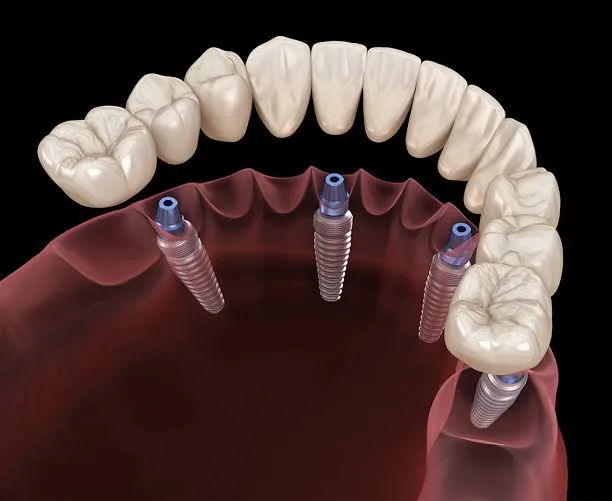
A dental implant is a screw-shaped artificial tooth root placed inside the jawbone, usually made of titanium or zirconium. These structures, which have the biological ability to fuse with the jawbone (osseointegration), provide a solid foundation for crowns, bridges, or removable prostheses placed on top of them.
Implant treatment can be applied to individuals whose jaw development is complete (generally 18 years of age and older) and whose general health status does not pose an obstacle to surgery. However, every individual’s oral structure and bone structure are different. Suitability for treatment is evaluated based on the following criteria:
Bone Density and Volume: There must be healthy bone tissue with sufficient height and width for the implant screw to anchor properly. In cases of bone loss, additional surgical procedures (bone powder/graft applications or sinus lifting) may be required.
General Health Condition: Uncontrolled diabetes, advanced osteoporosis, or conditions that suppress the immune system may delay the healing process. Individuals with systemic diseases should consult the relevant physician.
Oral Care: In people with active gum disease (periodontitis), gum treatment should first be completed, and the habit of oral hygiene should be established.
Tobacco Use: Heavy cigarette consumption may negatively affect the implant’s fusion with the bone by reducing oxygenation in the tissues.
How Is Implant Treatment Performed? Step-by-Step Treatment Process
Although implant treatment may seem like a procedure completed in a single day, it is a meticulous treatment protocol that includes planning, surgical application, and prosthetic stages.
1. Examination, Diagnosis, and Digital Planning
The first step of treatment is a detailed clinical examination. The dentist or oral and maxillofacial surgeon takes the patient’s general medical history. The thickness of the jawbone, nerve canals, and anatomical spaces are examined millimetrically with the help of 3D dental volumetric tomography (DVT) and panoramic X-rays. The angle, depth, and diameter where the implant will be placed are digitally determined at this stage.
2. Surgical Stage (Placement of the Implant)
The procedure is usually performed under local anesthesia; this way, the patient does not feel pain or discomfort during the procedure. The gum is opened, an implant socket is prepared in the jawbone, and the titanium screw is placed into the bone. Then the area is closed with stitches. In some cases where bone volume is sufficient, placing a temporary tooth on the same day (immediate loading) may be possible, while in the classical protocol a waiting period is planned for the bone to heal.
3. Healing Period (Osseointegration)
The time required for the screw to integrate with the bone cells is approximately 2-3 months in the lower jaw and 3-4 months in the upper jaw. If bone powder or sinus lift has been performed, this period may extend up to 6 months. During this stage, the patient continues daily life; temporary prostheses recommended by the physician can be used.
4. Prosthetic Stage (Placement of the Crown)
After bone fusion is complete, a gum-shaping cap (gingiva former) is placed with a minor procedure. After approximately one week of gum healing, impressions are taken. Zirconium, porcelain, or metal-supported crowns prepared in the laboratory are fixed onto the implant, restoring chewing and speech function.
What Should Be Considered When Planning Implant Treatment in Bursa?
Bursa has a wide healthcare network, from Nilüfer to Osmangazi, from Yıldırım to surrounding districts. The factors that people considering implant treatment in the city should take into account in their decision process are as follows:
Specialization and Experience: Surgical procedures being carried out by dentists specialized in Oral and Maxillofacial Surgery or Periodontology minimizes the risk of complications.
Imaging Capabilities: Having 3D jaw tomography within the clinic where treatment will be carried out provides a major advantage in terms of accurate diagnosis and proper angle planning.
Material Certification and Traceability: The implant applied conforming to international standards (CE, FDA), and the barcode and passport being delivered to the patient, are essential for possible future part replacements.
Accessibility and Continuity of Follow-Up: Implant treatment requires several follow-up sessions. Having the treatment center in an accessible location makes it easier not to miss stitch removal and interim check-up sessions.
Post-Treatment Care and Oral Hygiene
As important as the success of the surgical procedure is the care the patient shows afterward, which determines the implant’s lifespan.
What to Pay Attention to in the First 48 Hours
Cold compresses should be applied intermittently to the operation area after surgery, in line with the physician’s advice.
During the first 24 hours, the mouth should not be rinsed, spitting should be avoided, and straws should not be used; this may disrupt clot formation.
The prescribed antibiotic, painkiller, or mouthwash should be used in the dosage specified by the physician.
In the first days, excessively hot, acidic, hard, and granular foods should be avoided; lukewarm and soft foods should be preferred.
Long-Term Protection
Implants do not decay; however, the gum and bone tissue surrounding the implant may be exposed to infection (peri-implantitis). This condition can lead to implant loss. Therefore, in addition to brushing twice a day, the use of interdental brushes, super floss (special dental floss), and oral irrigators should not be neglected. Regular dental check-ups should be carried out at least twice a year.
Frequently Asked Questions
Is there a lot of pain during and after implant surgery?
Since the procedure is performed under local anesthesia, no pain is felt during the operation. After the anesthesia wears off, mild soreness or pressure may be felt; this can easily be controlled with standard painkillers.
If my jawbone has resorbed, can an implant still not be placed?
Bone insufficiency is a condition that can be overcome today. By increasing bone volume with grafting (adding bone powder) and membrane applications, an implant can be placed. These additional procedures extend the healing timeline somewhat.
How long does an implant last?
In individuals who take care of oral hygiene, do not miss routine check-ups, and have stable systemic health, implants can function for decades, even for a lifetime. The most critical determining factor is the patient’s daily tooth-brushing and interdental cleaning habits.
Can an implant be placed on the same day a tooth is extracted?
If there is no active and widespread infection at the root tip of the extracted tooth and the bone support in the area is suitable, the implant screw can be placed in the same session as the tooth extraction. The physician makes this decision after a detailed X-ray evaluation.
Each patient’s jawbone anatomy, systemic health status, and intraoral needs are different from one another. The most appropriate method to be applied in completing missing teeth is determined individually as a result of a detailed clinical and radiological examination by a specialist dentist. To achieve a healthy oral structure, it is recommended that you consult your physician without delaying your complaints.
Health Services Information and Warning Text
This article has been prepared strictly in accordance with the rules of the “Regulation on Promotional and Informational Activities in Health Services” solely for the purpose of informing the public and outlining a general framework regarding medical processes. The information provided here does not under any circumstances replace a diagnosis or treatment recommendation.
Orthognathic surgery is a major surgical operation performed under general anesthesia and, like any surgical intervention, carries medical risks such as bleeding, infection, and temporary or permanent loss of sensation. Each patient’s bone structure, healing capacity, and response to treatment are entirely individual. For this reason, it is very important not to form your own treatment expectations based on general information found on the internet. To obtain the correct diagnosis of your problems and determine the most suitable treatment method for you, you must consult a fully equipped healthcare institution and be examined by a physician specialized in the field.