 Türkçe
 English

Blog
Bursa Nilüfer Sinus Lifting
Bursa Sinus Lifting: Strengthen Your Bone Foundation for Safe Implant Treatment
Healthy teeth are not only the key to an aesthetic and beautiful smile, but also the foundation of an efficient digestive system and overall body health. However, replacing teeth lost for various reasons may not always be as simple as it seems. Today, the most permanent and natural-feeling solution for missing teeth is unquestionably implant surgery. Yet for a successful implant treatment, the jawbone must have a certain height, width, and density.
Patients who have lost their upper back teeth are often met with the following sentence when they visit the clinic: "You don’t have enough bone for an implant, your sinuses have dropped." At this point, sinus lifting, one of the greatest innovations dentistry offers and also known as “sinus lift,” comes into play. If you are looking for a reliable, comprehensive, and scientific guide about Bursa sinus lifting treatment, you can find all the details of the procedure, the modern methods used, and the recovery process in this article.
What Is Sinus Lifting (Sinus Lift), and Why Is It Anatomically Necessary?
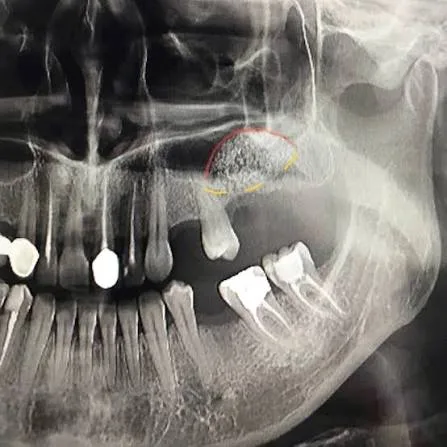
Sinus lifting is the process of surgically lifting the floor of the maxillary sinus cavities located in the back regions of the upper jaw and adding bone graft (bone powder) to the newly created space. Its purpose is to create the vertical bone height that titanium implants can securely anchor into.
The Function of the Maxillary Sinuses and Their Relationship to Tooth Loss
In our skull, there are air cavities (sinuses) that humidify the air we breathe, warm it, and adjust the resonance of our voice. The roots of our upper molars are adjacent to the maxillary sinuses located just behind the cheeks. In some individuals, these tooth roots may even extend directly into the sinus cavity.
When an upper back tooth is extracted, the jawbone in that area is deprived of mechanical stimulation (chewing force). The body gradually begins to resorb this bone tissue, which has lost its function. At the same time, the sinus membrane (membrane), taking advantage of the space created by the extraction, sags downward under the influence of gravity and air pressure. As a result of both the bone loss from below and the sinus sagging from above, the bone thickness available for implant placement can sometimes decrease to 1-2 millimeters. This is where the sinus lifting procedure restores the collapsed roof by lifting it back up and returning the bone tissue to its previous volume.
Who Is a Suitable Candidate for Sinus Lifting Surgery?
Only a maxillofacial surgeon can determine whether a patient needs a Bursa sinus lifting procedure based on three-dimensional dental tomography (CBCT) imaging. However, in general, the following patient groups are potential candidates for this procedure:
Those with Long-Term Tooth Loss: People who lost their upper molars years ago and have not had any prosthesis/implant placed in that area.
Those with Advanced Periodontal Disease: Patients who have lost the bone tissue surrounding their teeth due to gum inflammation.
Individuals with Anatomical Disadvantages: Those who, due to their genetic structure, naturally have very large sinus cavities and thin jawbones.
Those Who Have Had Traumatic Tooth Extraction: People whose upper jaw bone was damaged during a difficult tooth extraction in the past.
Modern Methods Used in Bursa Sinus Lifting Procedures
Bursa is one of the leading cities where digital dentistry and modern maxillofacial surgery are widely practiced today. When you visit the clinic, your specialist evaluates the tomographic data and measures the current amount of bone. Depending on the thickness of the remaining bone, one of two main sinus lift procedures is chosen.
Quick Solutions with Closed Sinus Lifting (Crestal Approach)
Closed sinus lifting is a less invasive method applied when there is a minimum amount of bone left to support an implant in the upper jaw (usually 4-5 mm or more).
In this technique, no window is opened from the side of the gum. The sinus floor is reached directly through the socket where the implant will be placed (from the crest) using special instruments (osteotomes). The sinus membrane is gently pushed upward through this socket, and bone powder is placed into the small space created. The biggest advantage of the closed method is that surgical trauma is very low and, in most cases, the implant can be placed in the jaw in the same session. The recovery process is extremely fast.
Open Sinus Lifting (Lateral Approach) and Dense Bone Formation
If the amount of bone remaining in the patient’s upper jaw is below 4 millimeters, applying the “open sinus lifting” method becomes necessary because the closed method will not provide sufficient volume.
In this procedure, a small incision is made on the cheek-facing side of the gum to access the jawbone. A small oval window is opened on the lateral wall of the bone without damaging the sinus membrane. The doctor enters through this window and lifts the sinus membrane upward with special surgical curettes (like raising the roof of a tent). A generous amount of bone graft is placed into the large space created below, covered with a protective membrane, and the gum is sutured.
Important Note: In open sinus lifting procedures, if the bone is very thin, such as 1-2 mm, the bone powder is allowed to harden before implant placement (average 4-6 months). Once the bone reaches sufficient hardness, the implants are placed in a second short procedure.
Comparison of Open and Closed Sinus Lifting
Feature | Closed Sinus Lifting | Open Sinus Lifting |
Remaining Bone Amount | 5 mm and above | 4 mm and below |
Surgical Entry Area | Through the implant socket (from below) | From the side wall of the jawbone (from the side) |
Implant Placement | Usually at the same time as the procedure | Mostly after a 4-6 month waiting period |
Procedure Time | 15 - 20 Dakika | 30 - 45 Dakika |
Risk of Swelling and Edema | Almost none | Mild to moderate swelling may be seen in the first few days |
Recovery Period After Treatment and Scientific Success Rates
Many patients are afraid of sinus lifting because the words “bone powder” and “surgery” are involved. Yet this procedure, performed under local anesthesia (regional numbing), is completely painless. Real success depends not only on the operation going perfectly, but also on the patient’s home care process.
Critical Points to Pay Attention to After the Procedure
Bursa sinus lifting after your surgery is completed, your body accepting the added bone powder and transforming it into living bone tissue (ossification) is a biophysiological process. To get through this delicate period smoothly, you must follow these rules exactly:
Avoid Creating Pressure: During the first 2-3 weeks, you should definitely avoid blowing your nose forcefully. If you feel the need to sneeze, you should sneeze with your mouth open and prevent pressure from forming in the sinus cavity.
Applying Cold Compresses: Especially within the first 24 hours after open sinus surgery, applying ice compresses intermittently to your cheek from the outside will greatly reduce any possible edema and swelling.
Medication Use: Using the antibiotic, painkiller, and decongestant nasal sprays prescribed by your dentist exactly as directed eliminates the risk of infection.
Smoking: Smoking dramatically reduces the amount of oxygen reaching the tissues. Smoking during the first month, when healing is most critical, seriously increases the risk of bone powder failure (nonunion).
Physical Activities: During the first weeks after the procedure, heavy sports, pool/sea activities, scuba diving, and air travel due to cabin pressure changes should be avoided.
Implant and Sinus Lifting Success in Light of Scientific Data
Global academic research and clinical follow-ups in the field of dentistry prove that sinus lifting procedures are incredibly reliable. According to long-term studies published in prestigious scientific journals such as International Journal of Oral and Maxillofacial Implants; the success rate of sinus lift operations performed with a successful surgical protocol and quality bone grafts (bovine xenografts or synthetic grafts) is above 95%.
The body does not reject this added bone powder as a foreign substance; on the contrary, it uses these particles as a “scaffold.” Its own bone cells (osteoblasts) surround this scaffold and, over the course of months, build a completely living, vascularized, and solid jawbone that belongs to the patient’s own biology.