 Türkçe
 English

Blog
Bursa Temporomandibular Joint Treatment (TMJ): Symptoms, Causes, and Treatment Methods
Bursa Temporomandibular Joint Treatment (TMJ Disorders): Comprehensive Solutions
The smooth performance of our essential functions such as chewing, speaking, swallowing, and yawning depends on the flawless operation of the temporomandibular joint (TMJ), which connects the lower jaw to the skull. Located just in front of the ear, this complex joint structure works in harmony with muscles, ligaments, and the joint disc to allow the jaw to move in three dimensions. However, disruption of this harmony can lead to TMJ disorders that seriously reduce quality of life. Applications in the field of Bursa temporomandibular joint treatment aim to identify the causes of these functional disorders and provide lasting solutions through a multidisciplinary approach.
What Are Temporomandibular Joint (TMJ) Disorders?
Temporomandibular joint disorders are clinical conditions characterized by pain and loss of function in the joint structure that connects the lower and upper jaws, the chewing muscles, or both areas at once. Unlike other joints in the body, the TMJ must work in synchronization on both sides (right and left). For this reason, even a minor problem on one side of the system usually affects the entire chewing mechanism.
The disorders are generally examined under three main headings:
Myofascial Pain: Spasm and pain in the muscles that enable jaw movements, as well as in the neck and shoulder muscles. It is the most common TMJ disorder.
Intra-articular Structural Disorders: These include displacement of the joint disc (disc displacement), jaw dislocation, or damage to the lower jawbone on the articular surface.
Inflammatory Joint Diseases: These are inflammations in the joint area (arthritis) or degenerative (wear-related) changes.
What Are the Symptoms of Temporomandibular Joint Disorders?
Jaw joint problems usually present themselves not only in the jaw area, but also with various complaints in the head, neck, and ear regions. If one or more of the following symptoms are observed, specialist evaluation is definitely required:
Dull or sharp pain felt around the jaw joint, in the cheeks, or in front of the ear
"Clicking", "popping", or friction (crepitation) sounds from the joint when opening or closing the mouth
Feeling of fatigue and pain in the jaw muscles upon waking in the morning (usually caused by clenching/grinding the teeth at night)
Inability to open the mouth fully, jaw locking, or limited movement
Pain while chewing, yawning, or speaking
Tinnitus or a feeling of fullness in the ear
Chronic headaches, neck pain, and shoulder pain of unexplained origin
Sudden changes in how the upper and lower teeth fit together (occlusion)
Main Causes of TMJ Disorders
Temporomandibular joint disorders rarely develop due to a single cause. They are usually a "multifactorial" condition that emerges from the combination of several factors:
Bruxism (Teeth Clenching and Grinding): Unconscious clenching of the teeth during sleep or daytime, especially due to stress and anxiety, places a load on the joint and chewing muscles far above normal.
Malocclusion: Crooked teeth, missing teeth, or improperly made prosthetics/fillings prevent the jaws from closing in the ideal position. This causes the joint to function asymmetrically.
Trauma: Direct blows to the jaw area (accidents, falls, etc.) or "whiplash" injuries in the neck area can damage the joint structure.
Systemic Diseases: Connective tissue or rheumatic diseases such as rheumatoid arthritis, osteoarthritis, or fibromyalgia can cause damage in the joint.
Postural Problems: Working positions where the head is constantly held forward (e.g., spending long periods at a computer) disrupt the balance in the neck and jaw muscles.
Bad Habits: Habits such as biting the lip or cheek, chewing gum constantly, biting nails, or holding the phone between the shoulder and ear while talking.
Temporomandibular Joint Treatment Methods Applied in Bursa
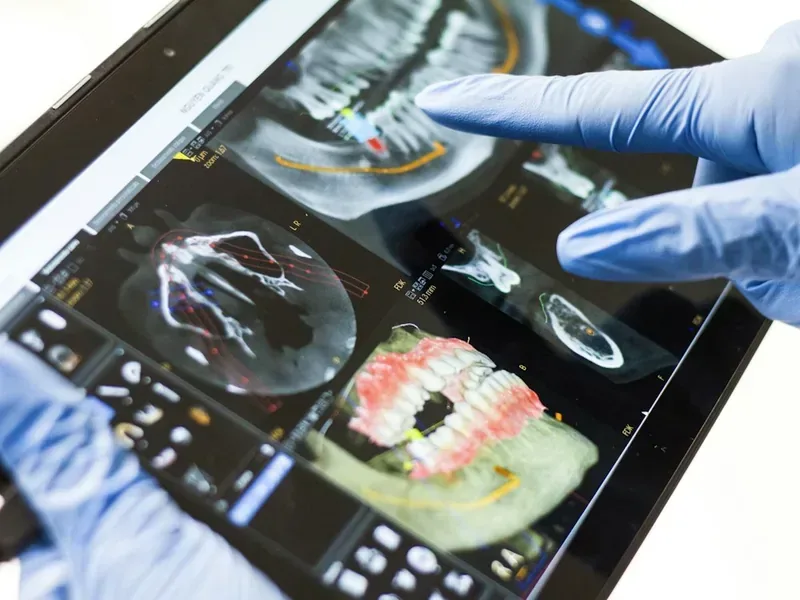
The general approach in TMJ treatment is to start with the least invasive (conservative) methods and move on to surgical options only when necessary. The process in Bursa temporomandibular joint treatment clinics begins with a detailed clinical examination, radiographic evaluation (panoramic X-ray, tomography, or MRI), and assessment of the patient's complaints.
1. Conservative Treatments and Lifestyle Changes
The first stage of treatment is to relieve muscle spasms and reduce the load on the joint.
Soft Diet: Eating soft foods for a period of time to avoid straining the chewing muscles.
Cold/Hot Applications: Using cold compresses for acute pain and warm compresses for chronic muscle spasms.
Physical Therapy and Exercises: Special exercises taught by a specialist physician to strengthen the jaw muscles and increase the joint's range of motion.
Medication: Muscle relaxants, anti-inflammatory pain relievers, or antidepressants may be prescribed in cases where psychological factors are predominant.
2. Splint Treatment (Night Guard)
This is the most commonly used method for disorders caused by bruxism (teeth clenching) and bite problems. A splint is a transparent appliance made of hard acrylic, usually worn on the upper teeth, tailored to the patient's jaw measurements.
It breaks direct contact between the upper and lower teeth, absorbing excessive force on the teeth.
It places the jaw joint in its most anatomically comfortable "rest" position.
By relieving muscle spasms, it largely reduces the fatigue and pain seen in the morning.
3. Occlusal Adjustments (Correcting the Bite)
If the problem is caused by an incompatibility in the way the teeth bite together; high fillings may need to be adjusted, missing teeth may need to be completed with prosthetics or implants, or orthodontic treatment (braces) may be required to bring the teeth into their ideal alignment.
4. Intra-articular Injections and Washing (Arthrocentesis)
In cases where conservative treatments are insufficient and joint mobility is severely restricted, washing the joint space with sterile fluids (arthrocentesis) may be performed. With this procedure, inflammatory substances inside the joint are removed, and hyaluronic acid is usually injected for a lubricating effect. In addition, in stubborn muscle spasms, Botox (Botulinum Toxin) injections can reduce the contraction force of the chewing muscles.
5. Surgical Treatments (Arthroscopy and Open Joint Surgery)
Surgical intervention may be required in advanced cases that do not respond to these methods and where there is severe damage to the joint disc or structural deformity. Although intra-articular interventions are generally preferred using a closed method (arthroscopy) today, open joint surgery may also be used in rare cases.
Conclusion
Temporomandibular joint disorders are serious health problems that not only make eating difficult, but also deeply affect an individual's quality of life with chronic pain. Bursa temporomandibular joint treatment approaches aim to produce personalized and lasting solutions by focusing on finding the underlying cause of the disease. Early interventions stop the progression of joint damage and usually resolve the problem without the need for surgical intervention. It is highly important for individuals who experience pain, sounds, or limited movement in the jaw area to consult a specialized dentist or jaw surgeon without delay.